


Last Tuesday I woke up at 102. Solid start. Had my normal breakfast, dosed the same amount I always do, went about my morning. Two hours later I'm at 215.
Wednesday morning. Wake up at 98. Same breakfast. Same dose. This time I'm at 135 two hours later.
What changed? Absolutely nothing that I could identify. Same food, same insulin, same timing. Completely different results.
That's the chaos.
Type 1 diabetes management would be simple if it was just insulin and carbs. Eat 50 grams of carbs, take 5 units, done. But your body has other plans.
Sleep quality from the night before changes your insulin sensitivity. Poor sleep spikes cortisol, which makes you insulin resistant and tells your liver to dump glucose. You need 20-30% more insulin the next day even though you did nothing different.
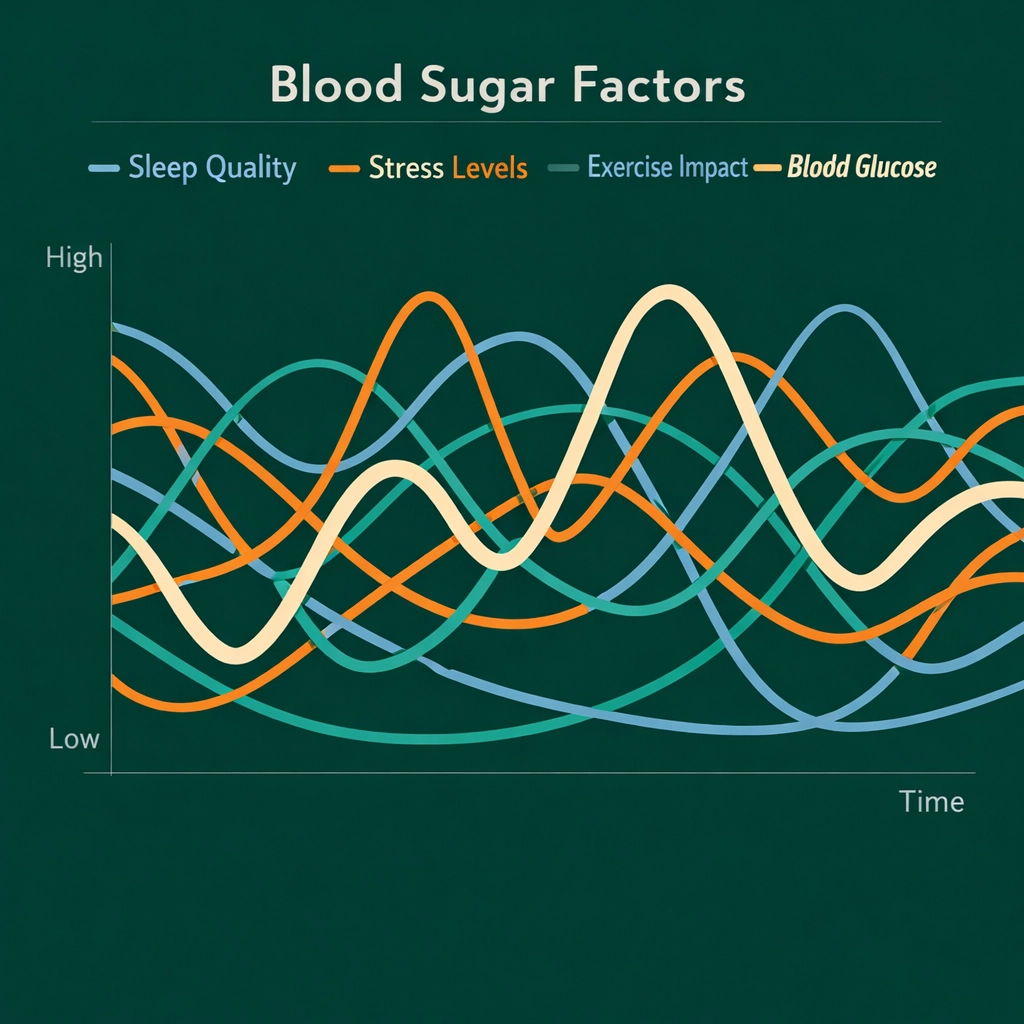
Stress does the same thing. Tight deadline at work? Argument with your spouse? Traffic jam that makes you late? Your body releases adrenaline and cortisol. Both raise blood sugar. You haven't eaten anything, but you're climbing to 180 because your body thinks you're being chased by a bear.
Exercise changes everything. A walk keeps you steady. A HIIT workout drops you fast during but spikes you after. Strength training can raise you in the moment but improve sensitivity for days. Race day adrenaline? Forget everything you thought you knew.
Hormones cycle constantly. Women deal with estrogen and progesterone fluctuating throughout the month, changing insulin needs week by week. Everyone deals with dawn phenomenon and the cortisol surge that happens just from waking up.
Illness multiplies the chaos. You're fighting an infection, so your body floods with stress hormones and inflammatory signals. Your blood sugar runs high for days even when you're barely eating. You're taking double your normal insulin just to stay under 200.
The problem isn't that these variables exist. The problem is they all happen at once, constantly changing, never in the same combination twice.
Chaos isn't dramatic. It's not an emergency every day. It's the constant low-grade uncertainty that makes you second-guess every decision.
You're about to eat lunch and you're at 145. Do you take your full dose? Half dose? Wait 15 minutes and check again? You slept poorly last night, but you also went for a long walk this morning. Which one matters more right now?
You dose for dinner and two hours later you're 190. Did you undercount the carbs? Is your infusion site going bad? Are you getting sick? Is it just random?
The glucose variability wears you down. Not the individual highs or lows, but the constant swings. You spike to 220 after breakfast, correct aggressively, drop to 65 before lunch, overtreat the low, climb back to 200 by mid-afternoon. Every day is a different roller coaster.
You can see what happened. Your CGM shows you every data point. What you can't see is why it happened. And without the why, you're stuck guessing.
Control doesn't mean perfect blood sugar. It means predictability.
Someone with chaotic Type 1 diabetes management swings between 60 and 240 throughout the day. Their average might look decent, their A1C might even be okay, but they feel terrible. They're exhausted from the constant corrections. They're anxious about the next unpredictable spike or drop.
Someone with controlled Type 1 diabetes management still has variability, but it's tighter. They stay mostly between 90 and 160. They can predict how a meal will affect them. They know which activities will drop them and by roughly how much. They understand their patterns.
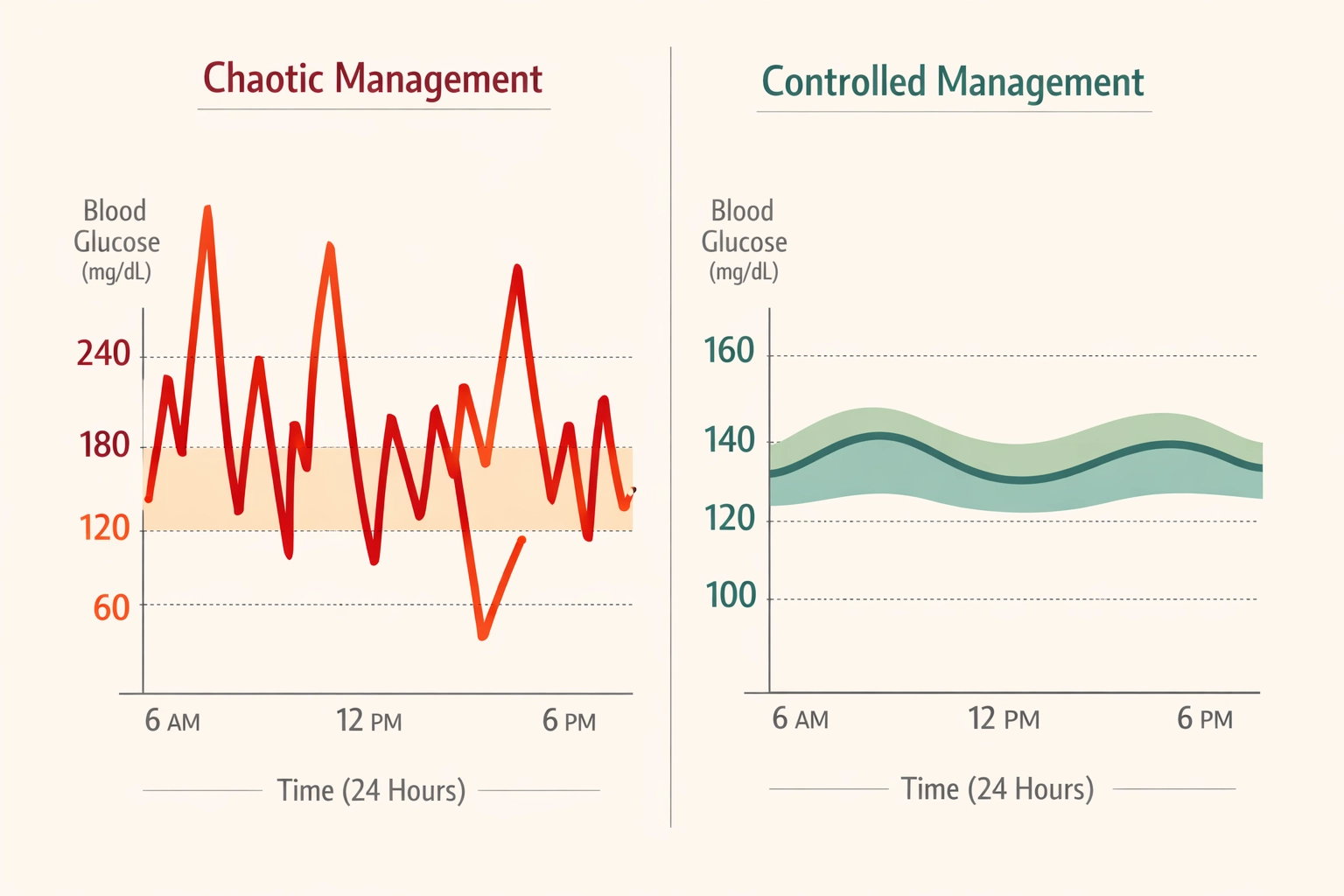
Same disease. Wildly different experience.
The person with control isn't doing something magical. They're not more disciplined or more careful. They've just figured out their patterns. They know that poor sleep means they need 25% more insulin the next day. They know that stress from work meetings spikes them by 40 mg/dL within an hour. They know their insulin sensitivity improves by mid-afternoon after morning exercise.
That knowledge transforms random chaos into manageable variability.
Your CGM gives you the what. You can see your blood sugar at any moment. That's massive progress compared to finger sticks eight times a day.
But the what doesn't explain anything. You're 180 right now. Okay. Why? Was it the meal three hours ago? The poor sleep last night? The stressful email you just read? The fact that you've been sitting at your desk for four hours straight?
All of those things affect blood sugar. But they don't affect it the same amount, and they don't affect everyone the same way. Your patterns are different from mine.
The only way to move from chaos to control is to see your patterns. Not generic diabetes advice about how carbs raise blood sugar or how exercise helps insulin sensitivity. Your specific patterns with your specific variables.
When you slept poorly and had a high-carb breakfast, what happened? When you exercised in the morning versus the evening, how did your sensitivity change? When you were stressed at work, how much did it spike you and how long did it last?
Those patterns exist in your data. You just can't see them when you're looking at individual days.
This is what I'm building Subseven to solve. The gap between having all the information and actually understanding what it means.
Subseven takes everything you're already tracking: your CGM data, your insulin doses, your meals, your activity, your sleep quality, your stress levels: and shows you which variables are actually impacting your blood sugar on any given day.
Each morning you get a brief explanation of how the previous day went. Not just "your average was 150," but which specific events had the biggest impact. The poor sleep tanked your insulin sensitivity by 30%. The afternoon walk brought you down 45 mg/dL and kept you stable for three hours. The high-fat dinner spiked you four hours later, not immediately.

Over time, the app identifies your patterns. The habits and behaviors and routines that consistently keep you in range. The things that consistently wreck your numbers. The combinations that create the biggest swings.
It's not generic advice. It's your data showing you your reality.
That's when things shift from chaos to control. Not because your diabetes got easier, but because you can finally predict what's going to happen. You stop guessing and start knowing.
Moving toward control doesn't mean you never spike. It means you can explain why you spiked.
You ate pizza and you knew it would hit you four hours later, so you set a reminder to dose more insulin at 8 PM. You slept terribly and you knew your morning insulin needs would be higher, so you increased your breakfast dose by 25%. You had a stressful meeting and you knew it would spike you by 40 mg/dL, so you weren't surprised when your CGM alarmed 30 minutes later.
Control means fewer surprises. Tighter variability. More time in range not because you're trying harder, but because you understand the patterns.
It also means less mental energy burned on constant decision-making. You're not analyzing every meal in the moment. You're not second-guessing every dose. You've seen this scenario before. You know what works.
That predictability is the difference between surviving diabetes and actually living with it.
You can't eliminate chaos completely. Type 1 diabetes is fundamentally unpredictable because too many variables affect blood sugar and they're all changing constantly.
But you can reduce it. You can turn wild glucose variability into manageable patterns. You can move from constant reactive corrections to proactive adjustments based on what you know about your body.
The tools exist now. CGMs give you real-time data. Apps like Subseven turn that data into actual insight. The gap between chaos and control is getting smaller.
You're already collecting the data. You're already living with the variables. The question is whether you can see the patterns in all of it.
That's the shift. From asking "what is my blood sugar right now?" to asking "why did my blood sugar do that?" From reacting to every spike and drop to understanding what causes them in the first place.
Control isn't perfect blood sugar. It's knowing your patterns well enough that diabetes stops feeling like a daily crisis and starts feeling like something you can actually manage.
That's the goal. Not perfection. Just predictability.


