


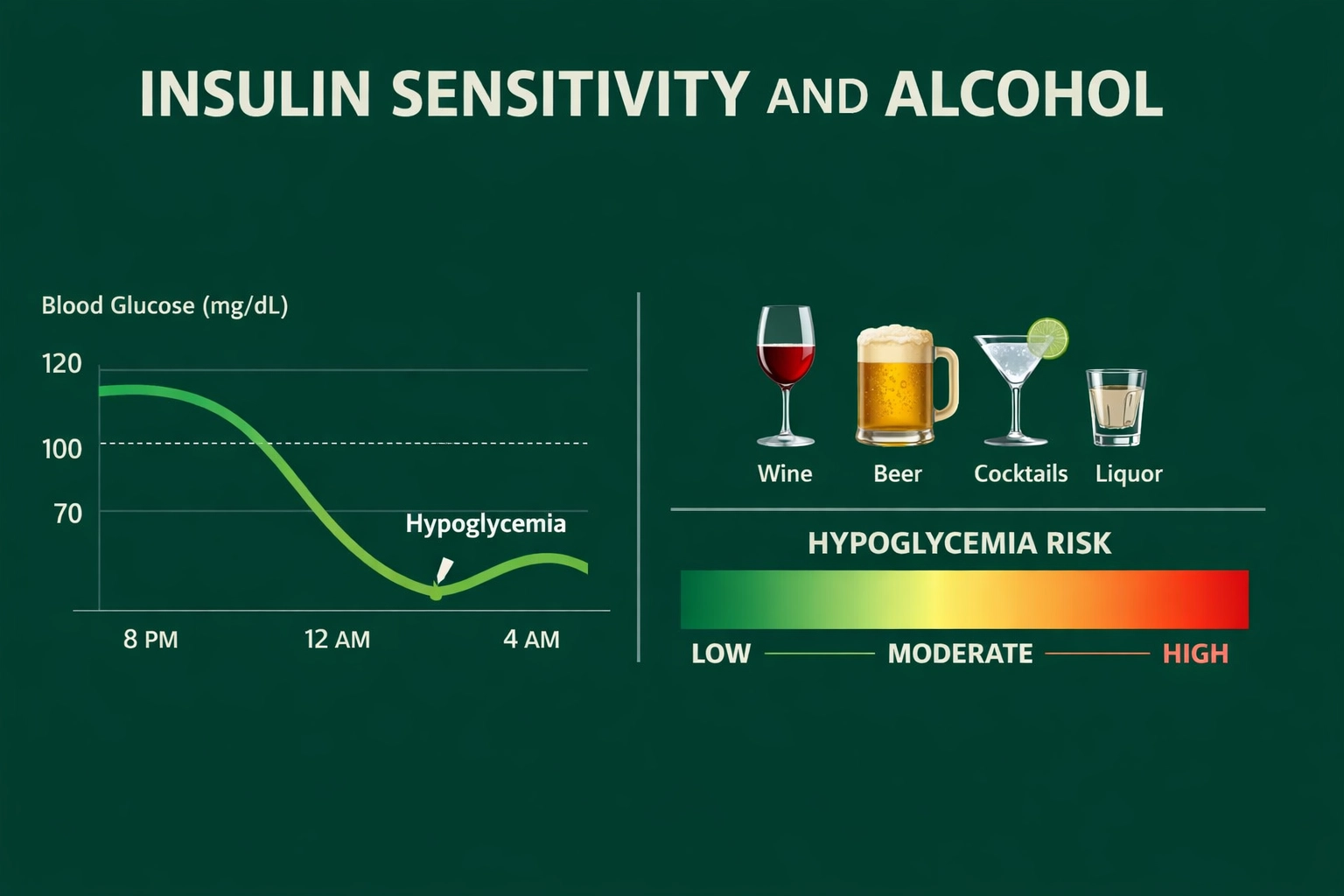
If you thought regular diabetes management was confusing, just add tequila.
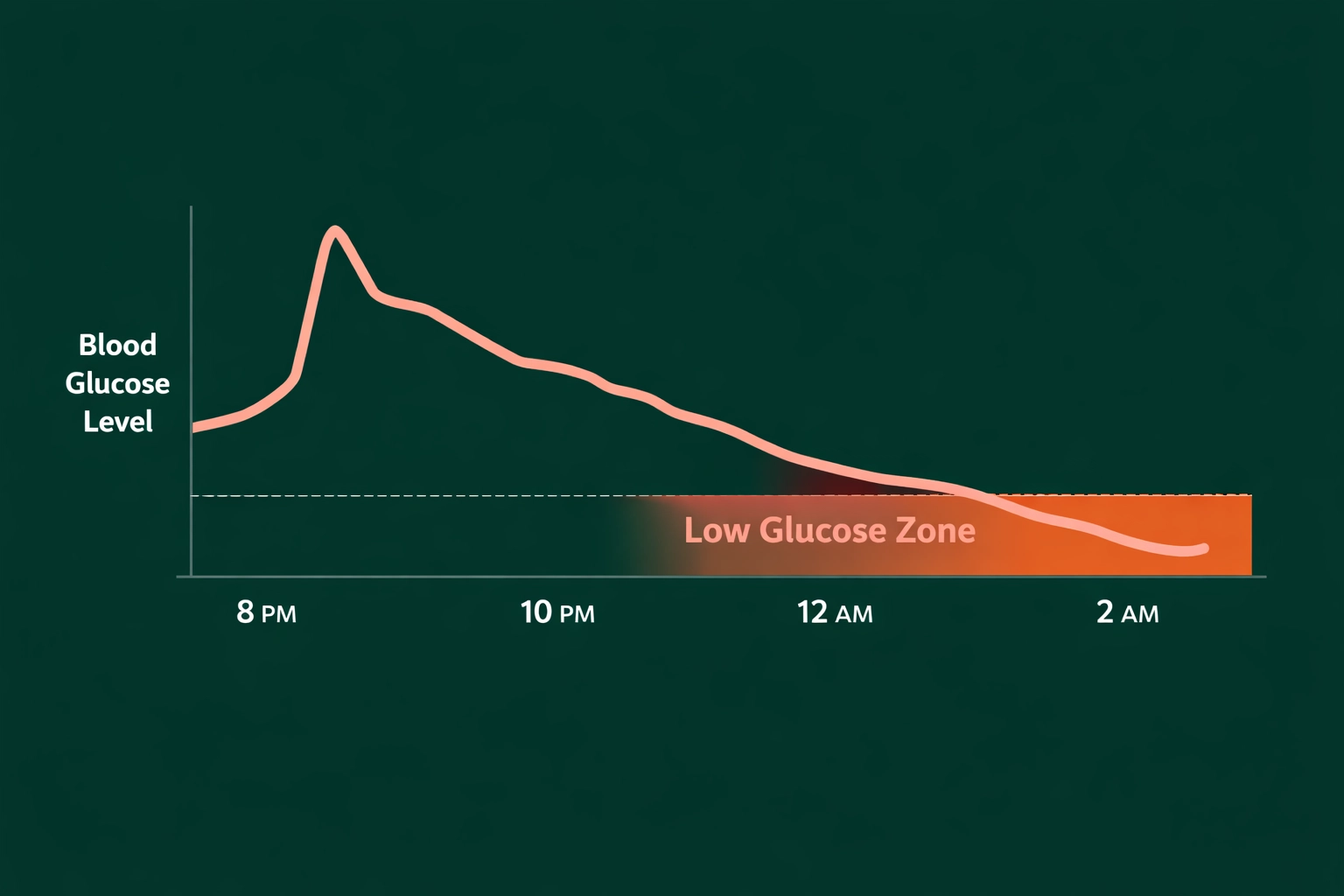
If you're a T1D like me, you are still going to have an occasional drink. So it's very important to understand how alcohol impacts your BG so you can do it worry-free.
The main thing to know is that alcohol can drop your blood sugar. Sometimes a little. Sometimes a lot. And the drop can happen hours after you stop drinking.
This catches people off guard because if you're drinking beer or wine or mixed drinks, you're taking in carbs. You'd expect those to spike you. They do, initially. But then later you might crash.
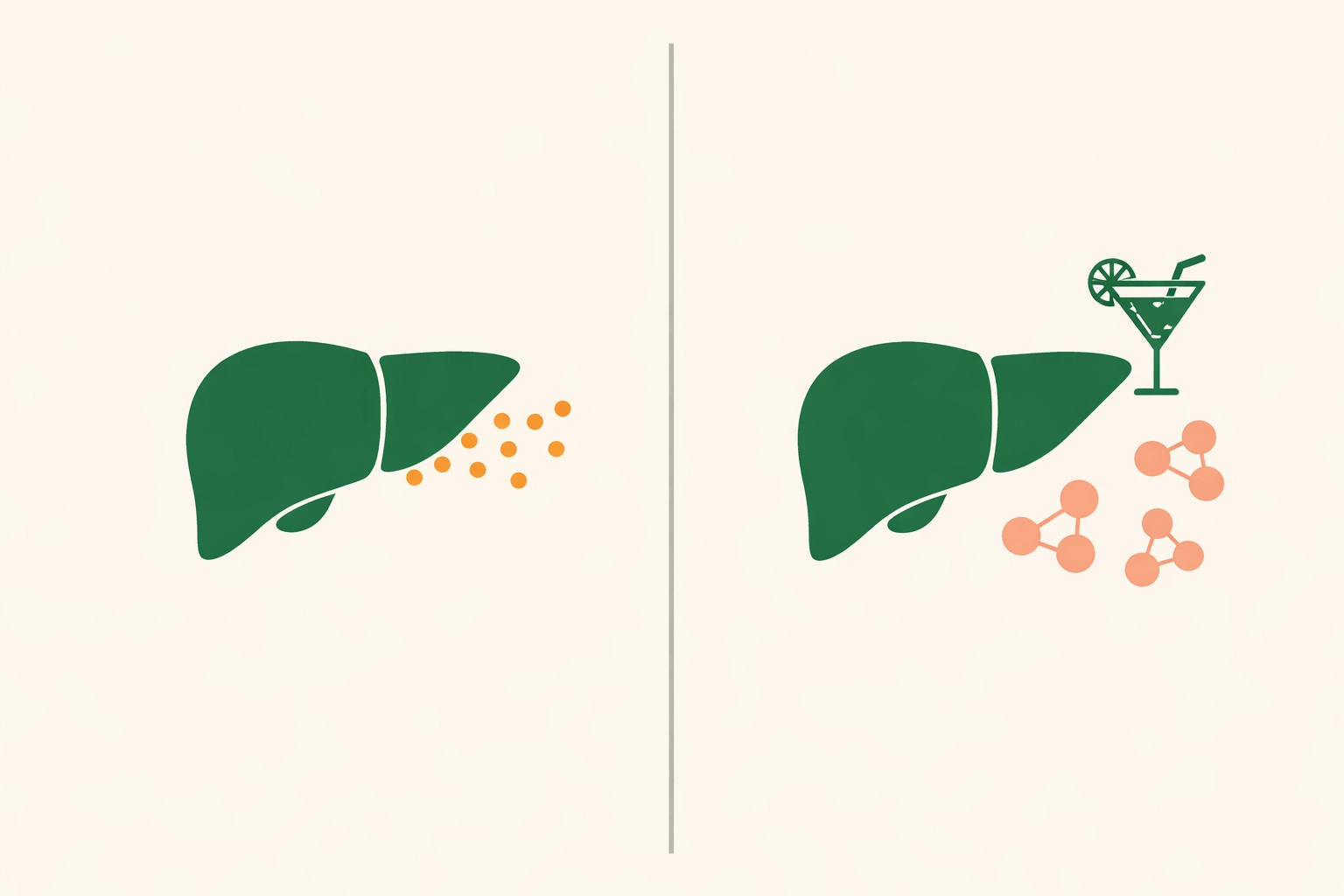
Your liver normally releases stored glucose throughout the day to keep your blood sugar stable. When you drink, your liver stops doing that. It focuses entirely on processing the alcohol instead. So even though you might have carbs from what you're drinking, your liver isn't doing its normal job of keeping your baseline up.
This is why people go low at 2am after drinking at 8pm.
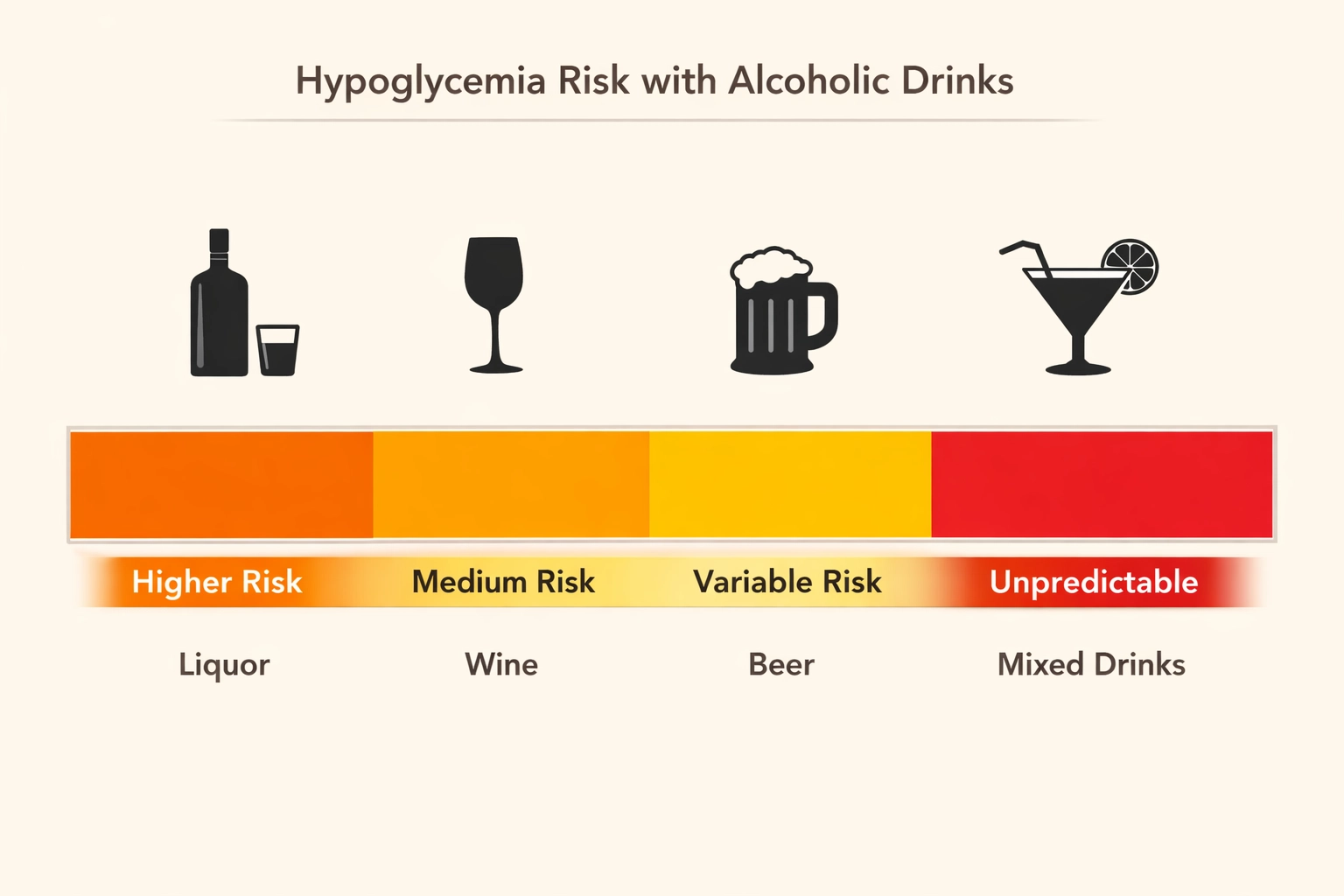
Beer has a lot of carbs. It could cause a short term spike and low term drop.
Liquor has almost no carbs, so be aware of any potential lows before going to bed.
Wine is somewhere in between, but still pretty low carb.
Mixed drinks are chaos because of the sugar in the mixer plus the alcohol. You can't predict whether the carbs or the liver shutdown will win.
You can do a few things to avoid any dangerous overnight lows:
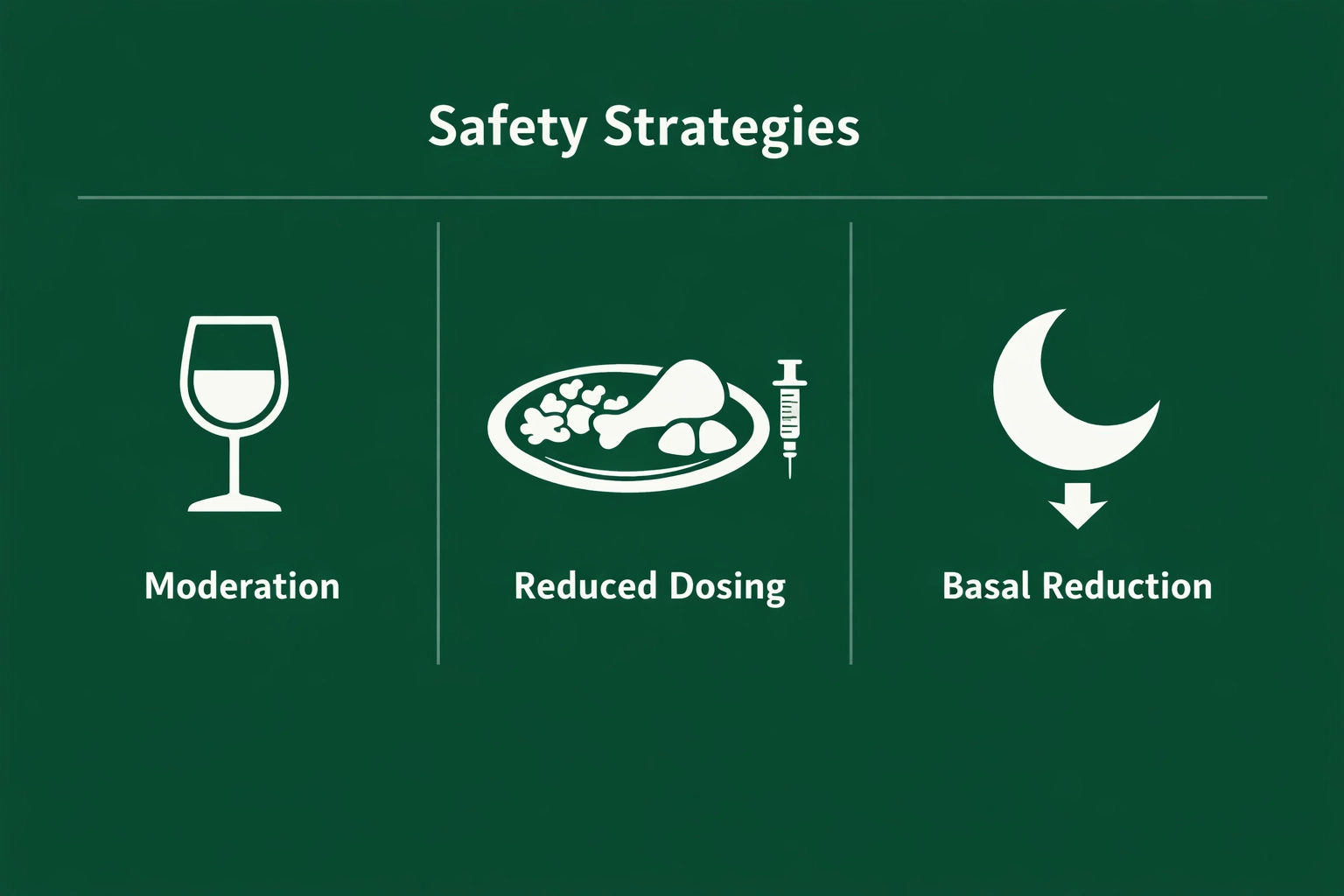
As always, understand what alcohol can do, and then plan for it the way that works best for you.


